



Abstract
Magnesium chloride (MgCl2), a highly water-soluble inorganic salt used across medical, industrial, agricultural, and laboratory applications, reaches a buyer by two routes, and only one of them is built to sell it. Where a Kroll site has an electrolysis cell, the co-product is electrolyzed back into magnesium and chlorine on site, because those are its two most expensive consumables [12]. Buyers planning a high-purity inquiry around titanium producers often find little volume. Meanwhile, U.S. net import reliance for magnesium compounds rose from 52% to 59% of apparent consumption between 2024 and 2025 [4], and both basins most often recommended for low-cost brine sourcing came under regulatory pressure this year. This blog sets out which route fits which specification, and how to avoid the specification error that does most damage.
Introduction and background
Why does this matter now?
The supply base moved on two fronts between early 2025 and late 2026. US Magnesium, one of only two extractors on the Great Salt Lake and the operator of the only U.S. primary magnesium smelter, filed for Chapter 11 in September 2025; its output had already fallen sharply after equipment failures in September 2021 and ceased in 2022 [5]. In January 2026, the Utah Division of Forestry, Fire and State Lands won a $30 million bid for the company’s 4,500 acres on the lake shore and up to 144,790 acre-feet of water rights, converting an extraction position into a conservation one [16], [17]. Compass Minerals, the remaining extractor, has separately entered a voluntary water and land conservation agreement with the same division [15]. In November 2025, Israel moved the Dead Sea concession, which expires on March 31, 2030, to competitive international tender; ICL relinquished its right of first refusal and accepted a payment reported at about $2.54 billion, against the $6 billion it had originally sought [13], [14]. Neither basin is marginal: Israel accounted for 56% of U.S. magnesium chloride imports and the Netherlands for 21% across 2021 to 2024, or 77% between them [4]. Proximity to a salt basin no longer implies security of supply.
Where does magnesium chloride come from?
Natural brine extraction is a primary product business: the producer exists to sell MgCl2, volumes are industrial, and price follows evaporation and freight economics. The Kroll process route is a co-product business: magnesium chloride forms when titanium tetrachloride (TiCl4) is reduced with molten magnesium at roughly 800 to 900 degrees Celsius under an inert argon blanket. The feed is already high purity and the atmosphere suppresses side reactions, which is why the co-product is clean; but the producer economics depend on titanium or zirconium sponge, not on the chloride. The two chains diverge at the final step. On the brine side, the product moves continuously to application. On the Kroll side, the chloride is designed to be consumed again by the same process, and it reaches a buyer only where a producer has chosen not to recover it.
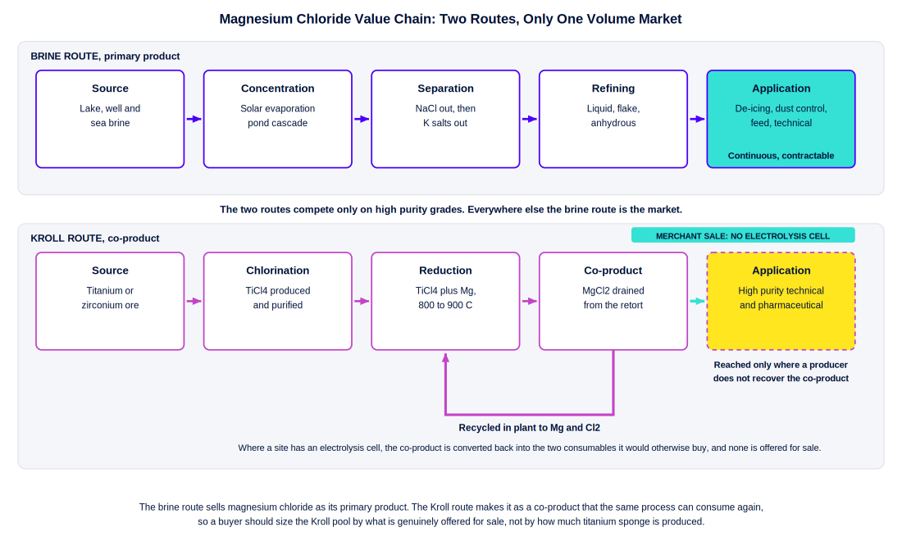
Figure 1: Magnesium chloride value chain, showing where Kroll co-product does and does not reach a buyer
Problem description
Why is high-purity co-product so hard to buy?
Where a titanium site has integrated electrolysis, the drained magnesium chloride is split back into magnesium and chlorine; the magnesium returns to reduction, the chlorine to chlorination. The loop is closed by design. The patent literature is explicit that where a reaction vessel contains no electrolysis cell, the magnesium chloride is pumped out and shipped elsewhere for reclamation, with the technical problems and costs that implies [12]. Merchant availability therefore turns on whether a site has an electrolysis cell, and volume is bounded by sponge output, because the chloride forms in fixed proportion to the titanium. The Kerala Minerals and Metals Limited (KMML) in India produces its co-product from a 500 metric ton (MT) per year sponge plant, and states it intends to recover magnesium from that by-product [10], [11].
The recycling step is not incidental to the process. USGS records that magnesium is routinely recovered by recycling the magnesium chloride produced in titanium manufacture, and that once the chloride is recycled only about 0.2 to 0.5 metric tons of make-up magnesium per metric ton of titanium is needed to cover losses [18]. Where the loop closes across a fence line instead of inside one plant, the effect on a buyer is unchanged: ATI’s Rowley titanium plant bought its magnesium from US Magnesium next door and sent its magnesium chloride back to the same company for reclamation into magnesium metal, not for sale as magnesium chloride [19], [20]. No public dataset splits recycled from merchant volume, which is why the question has to be put to each site rather than inferred from a supplier list.
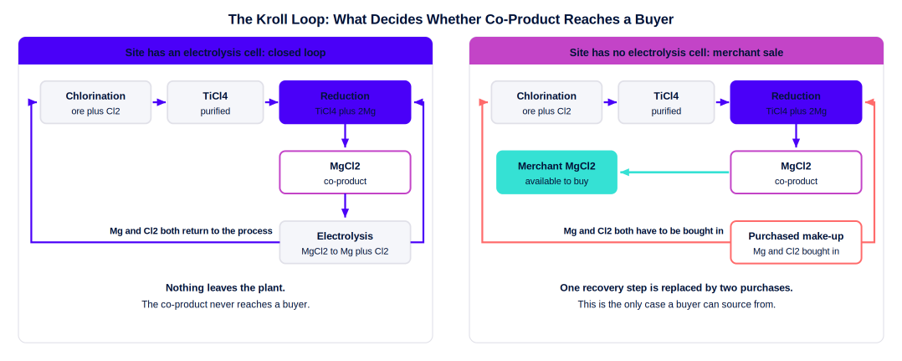
Figure 2: What decides whether Kroll co-product reaches a buyer
Why do supplier datasheets appear to contradict each other?
Magnesium chloride specifications mix three incompatible kinds of percentage: an assay on an anhydrous basis, a solution concentration, and the MgCl2 content of a hydrate. The third is fixed by chemistry. Pure magnesium chloride hexahydrate is 46.83% MgCl2 by mass, computed from standard atomic masses, so a flake quoted at about 47% is sitting on its stoichiometric ceiling and is a fully hydrated product of high quality, not a dirty one [7]. Read as a single purity column, that flake looks like the worst product on the list. The cost of getting this wrong lands at inquiry stage: it is the difference between rejecting a compliant flake and paying a premium for anhydrous grade nobody needs.
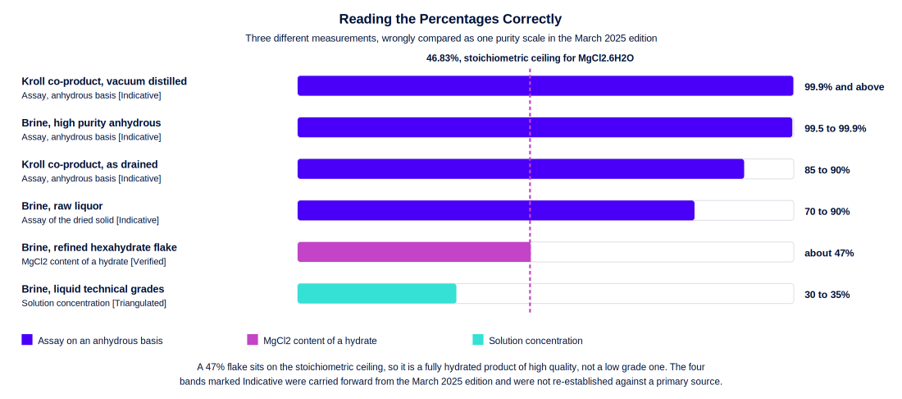
Figure 3: Why magnesium chloride percentages cannot be compared on one scale
Does proximity to a salt basin still guarantee low-cost supply?
Not reliably, and one widely repeated geographic assumption is also wrong. The Great Salt Lake, the Dead Sea, and Qarhan in China sit in or on the margin of the arid latitude bands, where evaporation exceeds rainfall today. Veendam in the Netherlands does not. The Zechstein source is a Permian fossil evaporite roughly 2,000 meters underground, where an unusually pure bischofite layer was identified in 1972 [8]. Its purity advantage is geological isolation, not climate, which is why it behaves differently from the other three on both quality and risk.
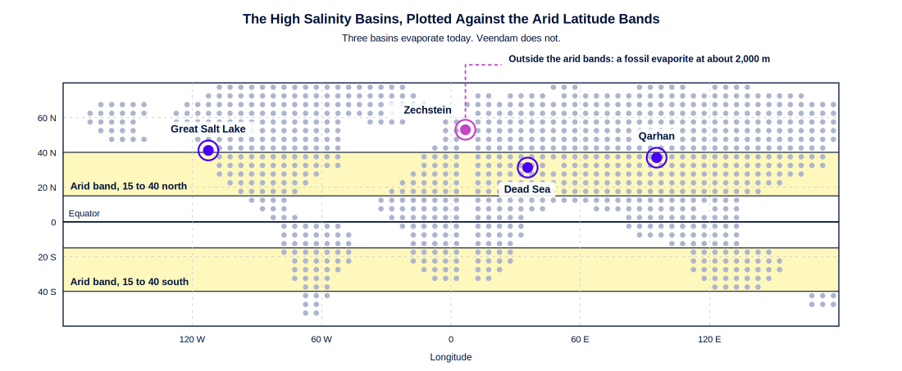
Figure 4: Salt basins plotted against the arid latitude bands
Evaluation criteria
A sound magnesium chloride source should meet the following tests before it enters a shortlist.
| Criteria | Why it matters |
| Merchant volume is genuinely available | Co-product in a landscape may never be sold if the site electrolyzes it in plant |
| Specification basis is stated explicitly | Assay, solution concentration, and hydrate content are not comparable; comparing them causes over-specification |
| Grade matches the duty, not the headline number | De-icing, dust control, and most technical duties are served by liquid or flake grades, not anhydrous |
| Basin tenure is secure for the contract term | Concessions, leases, and water rights now move faster than price here |
| Documentation can actually be produced | Feed, food, and pharmaceutical duties need named certifications, not general claims |
Solution options
Option 1: Brine extraction, the volume market
How it works: brine is concentrated in solar evaporation ponds; sodium chloride crystallizes first, then potassium salts, leaving magnesium chloride liquor. Compass Minerals, which describes itself as the largest U.S. producer of magnesium chloride [1], operates a pond complex of about 55,000 acres at Ogden on a three-year evaporation span, and states a production rate of 620,000 MT per year [2], [3]. Brine can also reach high purity, through thermal decomposition, vacuum heating under hydrogen chloride flow, and vacuum distillation. Benefits: volume under contract, a full grade range, and the lowest landed cost where the basin is near the delivery network. Trade-offs: supply responds to lake conditions with a multi-year lag, and basin tenure is now the dominant risk.
Option 2: Kroll process co-product, the specialty pool
How it works: magnesium chloride drained from titanium or zirconium sponge reduction is sold rather than returned to an electrolysis cell. Benefits: very high purity after vacuum distillation, and a feedstock that never contains the sodium or sulfate that brine grades must be refined to remove, since neither element enters the Kroll reaction. Trade-offs: merchant volume exists only where the producer has not closed the loop, and a producer that later installs recovery can withdraw without warning. Contract terms should anticipate that.
Option 3: Run both routes in one inquiry
For high-purity and pharmaceutical duties, a refined anhydrous brine grade competes directly with Kroll co-product, and the pool is thin on both sides. Where an anhydrous assay is genuinely required, run both.
Supporting analysis and evidence
De-icing is no longer a residual duty. The U.S. Geological Survey (USGS) ranked U.S. magnesium compounds consumption in 2025 as environmental, de-icing, chemical, and agricultural by quantity [4]; a year earlier the same series ranked de-icing last of the four [6]. Over the same period, net import reliance rose from 52% to 59%.
On the regulated side, the differentiator is documentation, not a purity claim. Nedmag supplies liquids at 32% solution and flake and pellets at 47% MgCl2, and states Good Manufacturing Practice feed certification (GMP+), registration in the EU Catalogue of Feed Materials, and compliance with EU Directive 2002/32 on undesirable substances in feed [7], [9]. Those are documents a supplier can produce on request.
A landscape built without the electrolysis check also carries suppliers that cannot serve the category at all. Allegheny Technologies still appears in older lists as a Kroll source, but it idled its Rowley, Utah sponge facility in August 2016 and ceased production that December. A producer that no longer reduces titanium cannot generate the co-product.
The landscape below separates what is evidenced from what rests on secondary mentions. That distinction is acceptable in a landscape and unacceptable in a shortlist.
| Supplier | Route and source | What it makes | Confidence |
| Compass Minerals | Brine, Great Salt Lake solar ponds | De-icer, dust control and industrial grades; 620,000 MT per year | Verified |
| Nedmag | Brine, Zechstein bischofite at 2,000 m | 32% solution; flake and pellets at 47%; GMP+ feed grade | Verified |
| KMML | Kroll, titanium sponge co-product | High purity co-product from a 500 MT per year sponge plant | Verified |
| State Nuclear Weike | Kroll, zirconium sponge co-product | Stated at about 99% earlier; not re-established | Indicative |
| Shanshan Chem, Cargill, JSC Kaustik | Brine | Named earlier; route and grades not re-established | Indicative |
Recommendations and next steps
- Fix the specification basis first. State whether each requirement is an assay on an anhydrous basis, a solution concentration, or a hydrate content, before the inquiry is issued.
- Ask one disqualifying question of every co-product supplier in the first round: does the site electrolyze its magnesium chloride, and if so, what volume is genuinely available for sale?
- Split the inquiry by route rather than by geography. The two routes have unrelated risk drivers, and a shortlist that mixes them tests neither properly.
- Add concession, mineral lease, and water rights questions to the standard risk set, and model the March 2030 Dead Sea transition in any multi-year position.
- Screen any Russian-domiciled supplier against sanctions, export control, and trade measure lists, dated on the day of the screen, before it enters a shortlist.
Conclusion
Treat brine extraction as the volume market and Kroll process co-product as a specialty pool sized by sponge output rather than demand, to be qualified site by site. Get the specification basis right before the inquiry goes out, because it prevents both the rejection of compliant material and the purchase of purity nobody needs.
References
[1] Compass Minerals, “What We Do,” compassminerals.com
[2] Compass Minerals, “Ogden, Utah solar evaporation pond complex,” compassminerals.com
[3] Compass Minerals International Inc., Form 10-K FY2024, U.S. Securities and Exchange Commission
[4] U.S. Geological Survey, Mineral Commodity Summaries 2026: Magnesium Compounds
[5] U.S. Geological Survey, Mineral Commodity Summaries 2026: Magnesium Metal
[6] U.S. Geological Survey, Mineral Commodity Summaries 2025: Magnesium Compounds
[7] Nedmag B.V., “Magnesium chloride,” nedmag.com
[8] Nedmag B.V., “What does Nedmag do,” nedmag.com
[9] Nedmag B.V., “Crops and animal feed,” nedmag.com
[10] The Kerala Minerals and Metals Ltd., “The Process,” kmml.com
[11] The Kerala Minerals and Metals Ltd., “Initiatives,” kmml.com
[12] U.S. Patent 7,901,483, “Process for recovering titanium”
[13] Globes, “ICL plunges on Dead Sea minerals concession compromise,” Nov. 18, 2025
[16] Deseret News, “Why Utah spent $30 million on buying US Magnesium company,” Jan. 28, 2026
[18] U.S. Geological Survey, Open-File Report 01-166, “Magnesium recycling in the United States in 1998”
[19] Tooele Transcript Bulletin, “ATI to idle its titanium facility” [20] U.S. Geological Survey, 2007 Minerals Yearbook: Magnesium Metal
Author

Gayathri Rajendran

Related Reading

20 Oct, 2026
The sulfur trap - How the hydrochloric acid route can cut dicalcium phosphate costs


20 Oct, 2026
How data center construction is revolutionizing the construction procurement landscape