

Cost pressure is constant. Cost reduction starts with control.
Supplier price increases, inflation, commodity movements, and shifting market conditions do not all mean the same thing. Procurement needs to know what is genuinely driving cost, where exposure sits, and which levers are commercially realistic. The earlier teams can separate unavoidable movement from preventable value leakage, the more options they have to protect budgets, savings, and margin.
$1 million
3x spend under management
Access savings faster
Move from cost pressure to cost control

01. Understand what moved
Connect commodity, supplier, market, and cost-structure signals to see the factors that are genuinely driving price movements.

02. Quantify your exposure
Translate those movements into category, portfolio, and budget exposure, so teams know where action matters most.

03. Choose the right lever
Identify whether (and when) to challenge, renegotiate, re-source, re-specify, change timing – or accept movement where the economics support it.

04. Act with evidence
Use decision-grade intelligence and recommendations to protect budgets, challenge increases, defend margins, and capture savings with confidence.
Our Solutions
Put cost intelligence to work
Bring together the intelligence, analysis, and recommendations needed to understand cost pressure, identify the right response, and protect value.
Inflation Watch
Assess inflation exposure, cost-driver movement, and forecasts across categories, business units, SKUs, and regions so teams can budget, challenge increases, and act before volatility hits.



Cost intelligence in practice
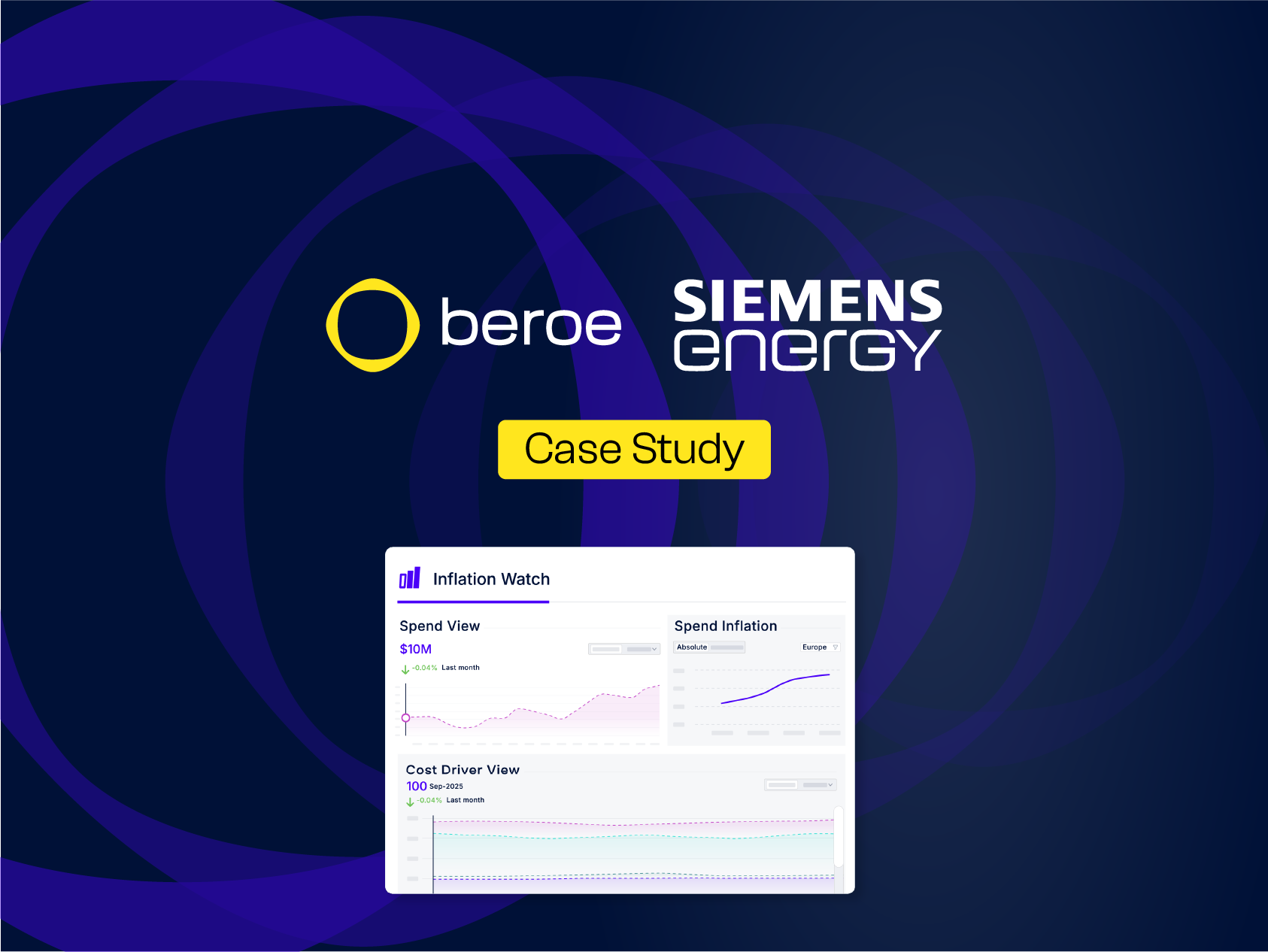
Siemens Energy Case Study

From Volatility to Visibility – An Inflation Management Guide for a New Era of Uncertainty
Beroe Enhances Inflation Watch to Transform Enterprise Cost Intelligence and Inflation Risk Management
Navigating Inflation in a World of Volatility: How Procurement Can Move from Firefighting to Strategy
Questions procurement teams ask about reducing and controlling costs
Procurement cost intelligence combines cost structures, price trends, commodity movements, supplier data, and market context to show what is driving spend. It helps teams move beyond historic prices and generic indices to understand what costs should be, where pressure is emerging, and which actions are commercially justified.
By breaking a category into its underlying cost components – such as raw materials, labor, energy, logistics, and margin – teams can compare supplier claims with observed market movement. This helps distinguish genuine cost pressure from unsupported increases and gives procurement stronger evidence for negotiation or escalation.
Beroe helps teams identify where market conditions, cost structures, supplier pricing, or category dynamics create room to act. That may mean challenging an increase, capturing deflation, changing sourcing strategy, adjusting timing, or focusing effort where the commercial opportunity is strongest.
Inflation Watch provides cost-driver transparency, forecasting, scenario modeling, and spend-impact analysis across categories and portfolios. That helps procurement understand exposure earlier, improve budgeting, strengthen supplier negotiations, and respond before volatility turns into an unexpected cost increase.
AI can accelerate access to cost structures, forecasts, market signals, and scenario analysis, reducing the time teams spend assembling information. Beroe combines that speed with procurement-specific intelligence and expert context so teams can evaluate cost pressure and act with stronger evidence.


