Insights from Beroe’s panel session at the Americas Procurement Congress
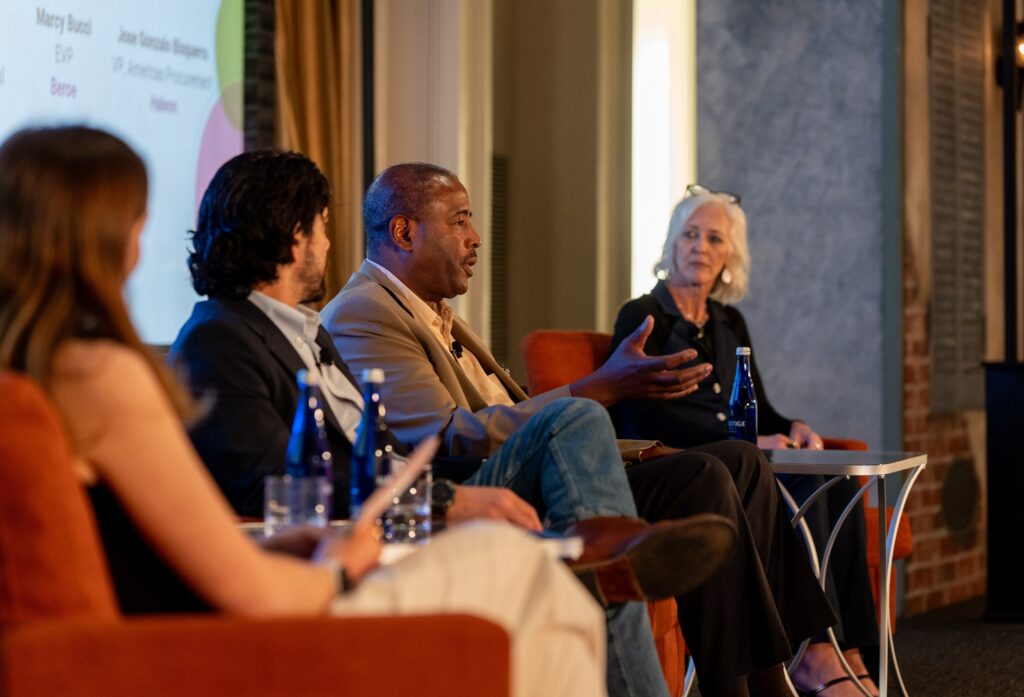
The promise of AI in procurement is real, but so is the risk of mistaking speed and access for certainty. At this week’s Americas Procurement Congress, Beroe’s Marcy Bucci joined George Ellis (Global Leader, Procurement Operational Excellence at Corteva) and Jose Gonzalo Bisquerra Mora (VP Marketing, Sales and Technology Global Procurement at Haleon) for a candid conversation about what it actually takes to turn information into intelligence that’s fit for high-stakes decisions.
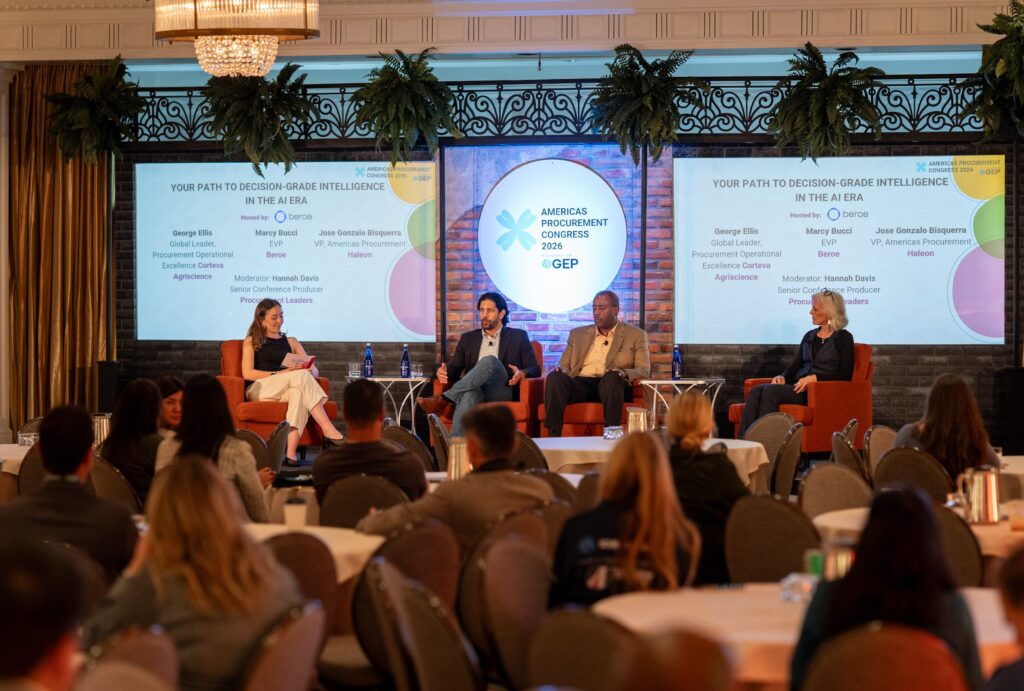
Here are five takeaways that resonated most.
1. Decision-grade intelligence isn’t a product – it’s a standard
Not all information is created equal. When procurement professionals reach for AI tools to shortlist suppliers or draft a strategy, they’re drawing on something genuinely useful. But “useful” and “decision-grade” are not the same thing.
Decision-grade means accurate, verified, source-checked, and critically, contextualized to your organization’s size, scale, geography, and strategic constraints. Generic market data applied universally can produce very different outcomes for different organizations. The standard isn’t just about the quality of the data; it’s about the fit.
Beroe’s Marcy Bucci put it plainly:
“Decision-grade intelligence is tailored for you. It fits. Like a custom-made suit.”
2. AI is the starting point, not the finish line
This wasn’t an anti-AI panel. Far from it. The consensus was that AI tools, including ChatGPT, Copilot, and others, are genuinely transformative for acceleration, ideation, and early-stage research. The caution applies to the decision itself.
George Ellis from Corteva described how an AI-first mindset is already reshaping how high-performing procurement teams work:
“The ones who get the most from AI are those with an AI-first mindset. They think about how to organize their day leveraging AI.”
The risk emerges when AI output goes from foundation to final answer without validation. Two people can ask the same question of an AI tool and receive meaningfully different responses. That’s not a basis for a recommendation to the CFO, a supplier negotiation, or a lock-in decision. As Marcy noted, what elevates AI output into decision-grade intelligence is the human expertise layer: analysts who can validate, triangulate, and contextualize.
3. Procurement already holds more intelligence than it realizes
Jose Gonzalo Bisquerra Mora from Haleon argued that procurement teams consistently underestimate the intelligence they already possess, in supplier conversations, should-cost models, category strategies, and industry relationships.
“Procurement is the center of intelligence in the supply chain. We see things that no other function sees. And I don’t think we’ve fully realized that yet.”
His team proved this during the recent tariff disruption. Category managers who knew their materials intimately, including origin, composition, and cost structure, fed that knowledge into AI tools alongside category strategies and should-cost models to build a tariff scenario modeling tool almost overnight. The result wasn’t just risk mitigation; it unlocked a commercial activation decision. Procurement told the business that competitors would be hit harder, so why not lean in and advertise?
The lesson: audit what your teams already know before looking outward. AI can amplify existing intelligence, but it can’t substitute it.
4. Timeliness is as important as accuracy
Intelligence that arrives after the decision has been made is not intelligence; it’s a post-mortem. George made this point in the context of logistics and commodities:
“If you go to market at the wrong time when rates are high and lock in for one or two years, then the market changes, you’ve made a very costly mistake.”
The implication for procurement teams is structural, not tactical. Building market intelligence as a standing habit, embedded into operating rhythms and category management practices, means that when the urgent moment arrives, teams have context and muscle memory, not just a scramble. Jose Gonzalo likened it to reading emails: when intelligence becomes a daily practice, the instinct to act on it develops naturally.
5. ROI doesn’t need a single number; it needs a proxy
The ROI of market intelligence is one of procurement’s perennial debates, and the panel didn’t pretend there’s a clean formula. But the panelists offered a compelling reframe.
Marcy’s benchmark: the quality and speed of decisions, not a dollar figure.
“When you can stop debating the facts and start deliberating on strategies, that time saving is enormous.”
George added prevention of rework as a concrete, underappreciated value driver. Sourcing projects that must restart because supplier due diligence was insufficient create a very real cost. And Jose Gonzalo offered perhaps the most human measure of all: you know you have decision-grade intelligence when your instinct is to immediately brief your manager: “That spider sense, especially in procurement, is a reliable signal that something actionable has surfaced.”
Final thought
The AI era doesn’t diminish the value of market intelligence; it raises the stakes for it. As AI tools make basic information faster and cheaper to access, the differentiator shifts to what’s done with it: the triangulation, the contextualization, and the expert judgment that turns data points into defensible decisions.
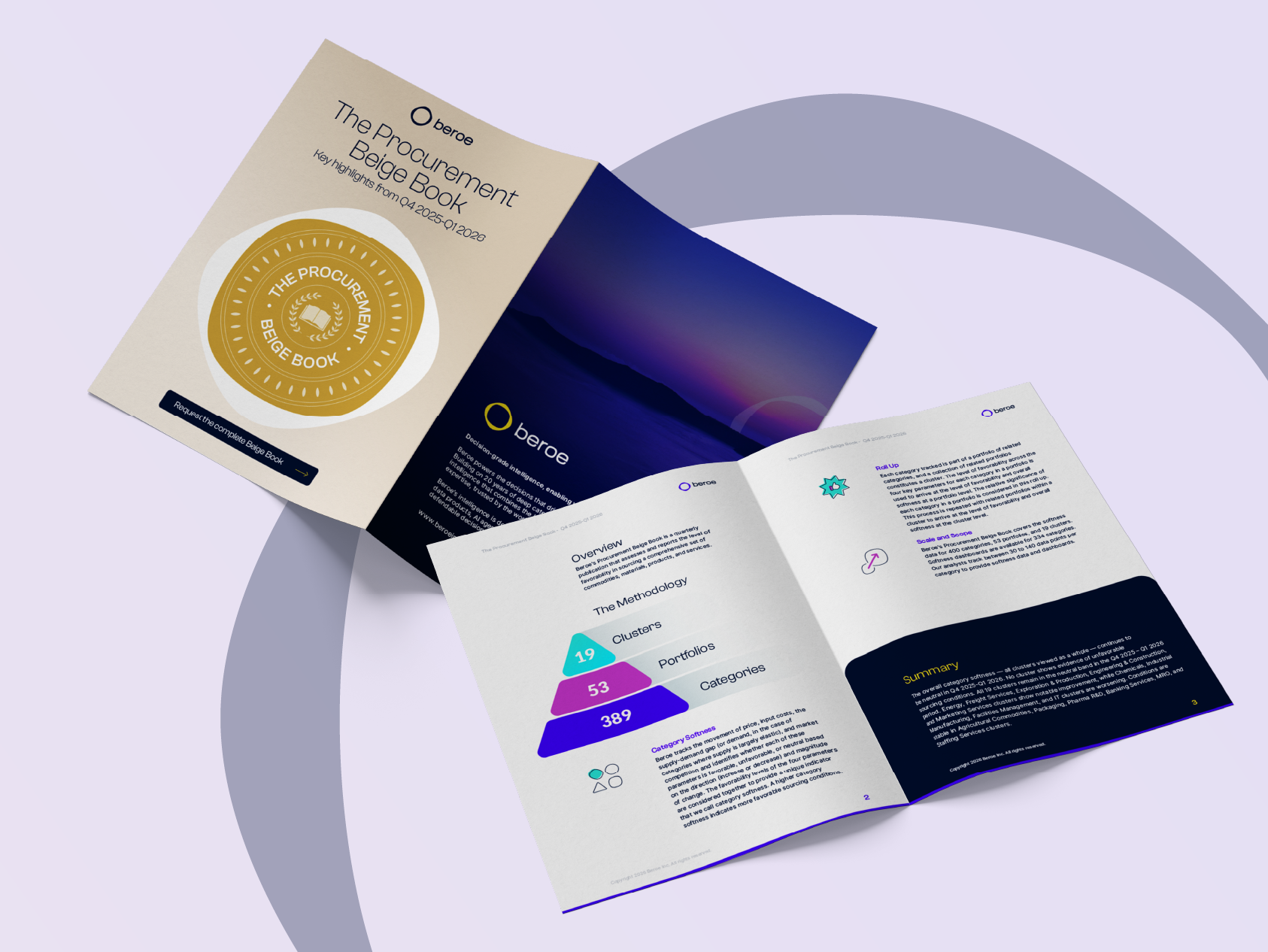
If this sounds like a problem you’re grappling with, read more in our brand new whitepaper, Market Intelligence in the Age of AI.
Related Reading


25 Mar, 2026
The Rising Significance of Secondary Aluminum: Supply Chains, Protectionism, and Industrial Implications